Cytotoxicity assays

Cytotoxicity assays overview
Who provides Cytotoxicity assays
Companies providing Cytotoxicity assays
How cytotoxicity assays are run and read
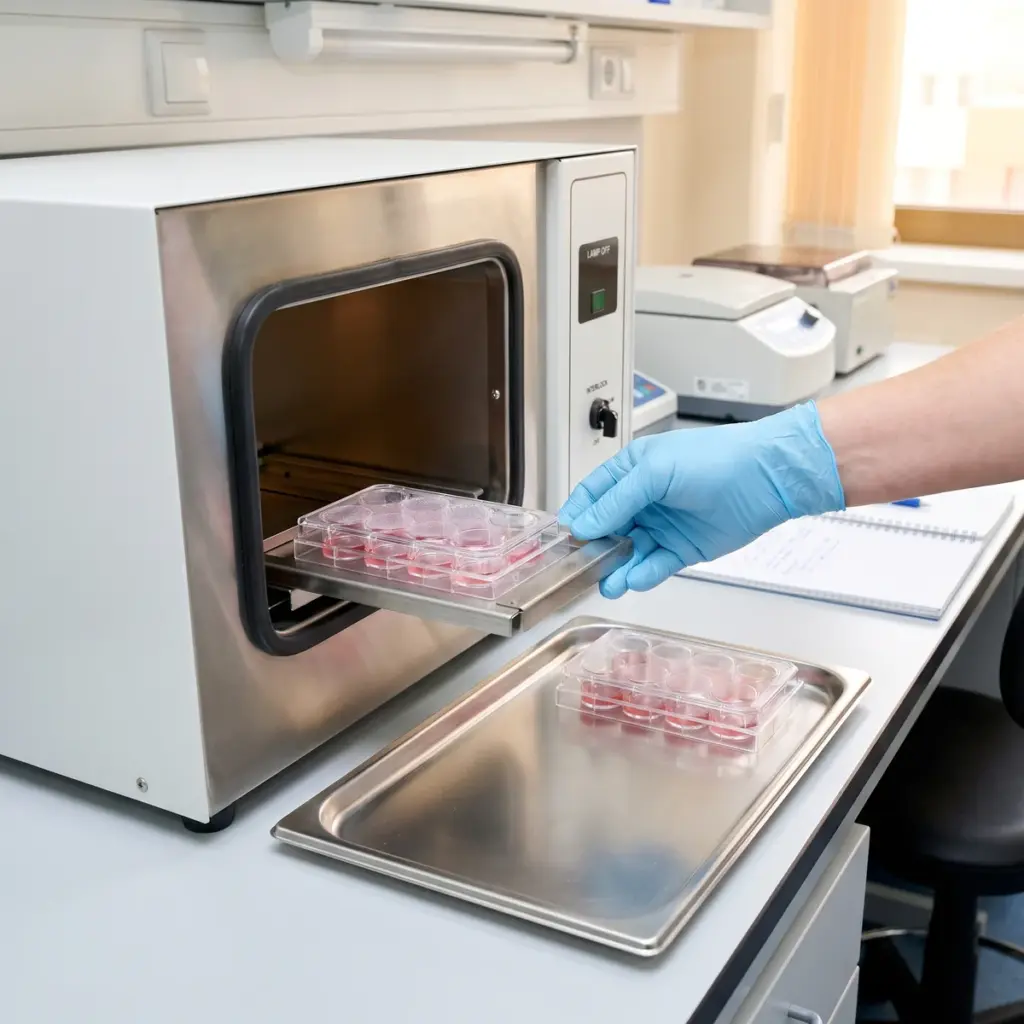
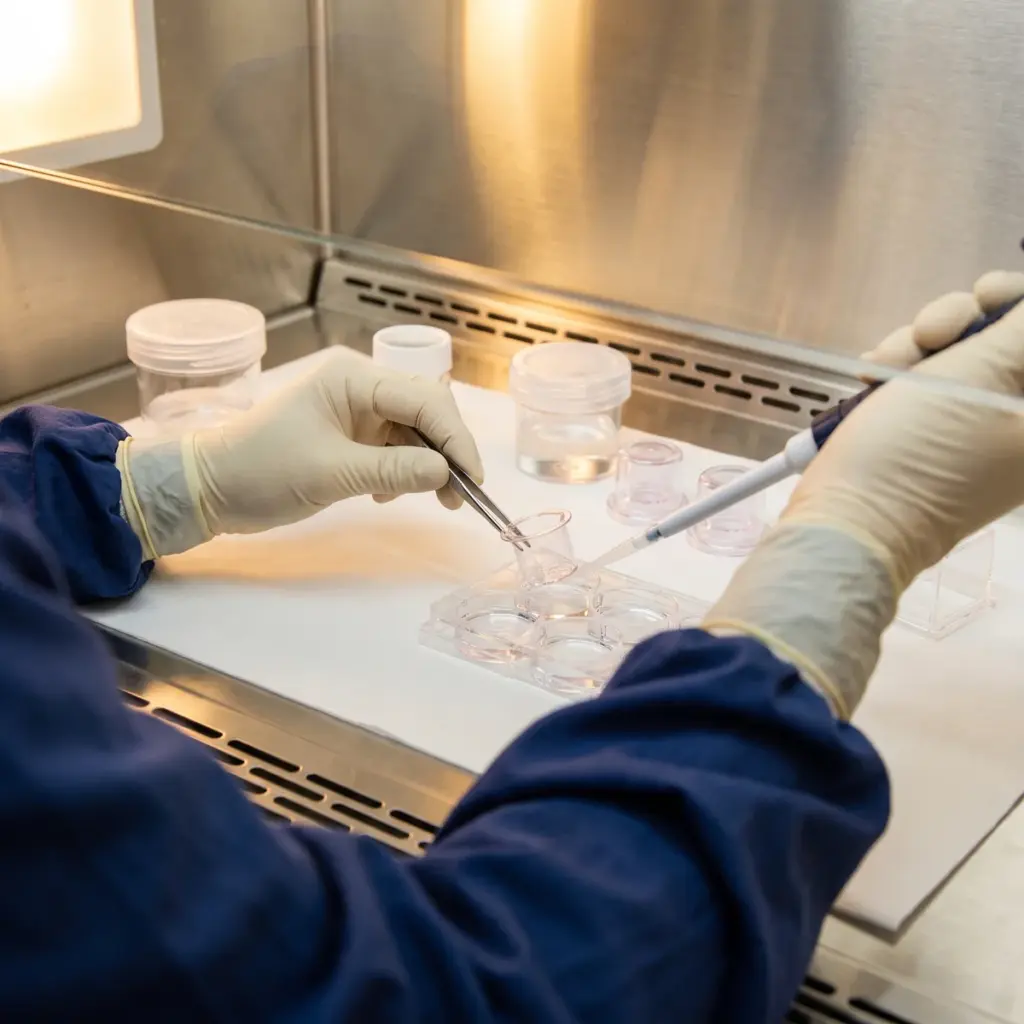
The laboratory seeds cells into multi-well plates, lets them attach, then replaces the medium with the test material at a range of dilutions. After a set exposure time the material is washed off and a viability reagent is added. A plate reader measures the signal in each well, which is compared with untreated cells and a positive control.
Choice of viability endpoint
Each readout tracks a different part of cell health, and many studies use two for confirmation.
- MTT and XTT: conversion of a tetrazolium salt by mitochondrial enzymes in living cells
- Neutral red uptake: dye stored in the lysosomes of intact cells
- LDH release: an enzyme that leaks into the medium when membranes are damaged
- ATP content: luminescence from the energy stores of viable cells
Cell models and sample preparation
Keratinocytes represent the epidermis and fibroblasts the dermis, and the choice follows the intended use of the ingredient. Water-soluble materials go straight into culture medium. Oils, waxes and finished emulsions need a solvent or an extraction step, which the laboratory validates so that the vehicle itself has no effect. Strongly coloured or reducing materials, such as some plant extracts, can react with the dye, so cell-free blanks are run to correct for that.
IC50 values and the study report
The report gives the viability at each concentration as a percentage of untreated control, the fitted concentration-response curve and the IC50, the concentration that halves the measured signal. It also lists the cell line, passage, exposure time, replicates and control results, so you can compare candidates tested on different dates.
Where cytotoxicity assays fit in product development
Cytotoxicity data are cheap to generate and come back quickly, so they sit at the front of most in vitro programmes.
Ranking extracts and preservatives by IC50
Cytotoxicity testing is quick and runs many samples in parallel, which makes it the standard tool for comparing options. A supplier with ten botanical extracts can rank them by IC50 and take forward the gentlest. A formulator choosing between preservative systems or surfactant blends gets a relative ranking on the same cell type within days.
Setting doses for efficacy and safety assays
Most cell-based efficacy tests, such as collagen synthesis or anti-inflammatory assays, must run at concentrations that leave cells healthy. A cytotoxicity range-finder defines that window first. The same data guide dose selection for sensitisation assays and for 3T3 NRU phototoxicity testing, which itself uses the neutral red endpoint.
Next steps after a screen
When a candidate goes forward, tissue-level methods give results the safety file can cite. Skin irritation testing on reconstructed epidermis applies the material topically, as a consumer would, and classifies it under a validated prediction model. Ask the cytotoxicity provider whether they also run these follow-up methods, since keeping the work with one laboratory simplifies sample handling.
More in In Vitro & In Chemico Safety Testing
In vitro and in chemico safety testing uses cell cultures, tissue models and chemical assays to identify irritation, sensitisation and phototoxic hazards.